
How to Stop Dog Car Anxiety: 7 Steps That Work
Table of Contents
- Why Dogs Get Anxious in the Car: Common Triggers
- Signs of Dog Travel Stress You Should Not Ignore
-
Desensitization Training for Dogs: A Step-by-Step Plan
- Step 1: Start With Short-Duration Trips Around the Block
- Step 2: Pair the Car With High-Value Rewards
- Step 3: Build Duration and Distance Gradually
- Step 4: Make Every Early Trip End Somewhere Good
- Step 5: Troubleshoot the Stall
- Step 6: Handle Post-Traumatic Car Anxiety Differently
- Step 7: Transition From Crate to Seat Belt Without a Regression
- Dog Car Safety Gear That Reduces Anxiety and Keeps Pets Secure
- Choosing the Best Dog Harness for Car Travel
- Managing Motion Sickness and Environmental Triggers
- When to Call a Veterinary Behaviorist
- Conclusion: A Calmer Ride Starts With One Short Trip
- Frequently Asked Questions
Last Updated: September 21, 2026
Why Dogs Get Anxious in the Car: Common Triggers
Dog car anxiety is a stress response that happens when a dog links the car to something unpleasant, like nausea, a scary vet visit, or a bad memory. The good news: this fear is fixable. Below, we'll show you exactly how to stop dog car anxiety with a seven-step plan.
The triggers usually fall into a few buckets:
- Motion sickness and nausea that makes the car feel bad
- A single bad trip (vet visit, accident, loud noise) that sticks
- Sensory overload from motion, smells, and sounds
- Lack of a secure spot, so the dog slides or paces
- Breed-specific sensitivity, common in herding and toy breeds
Signs of Dog Travel Stress You Should Not Ignore
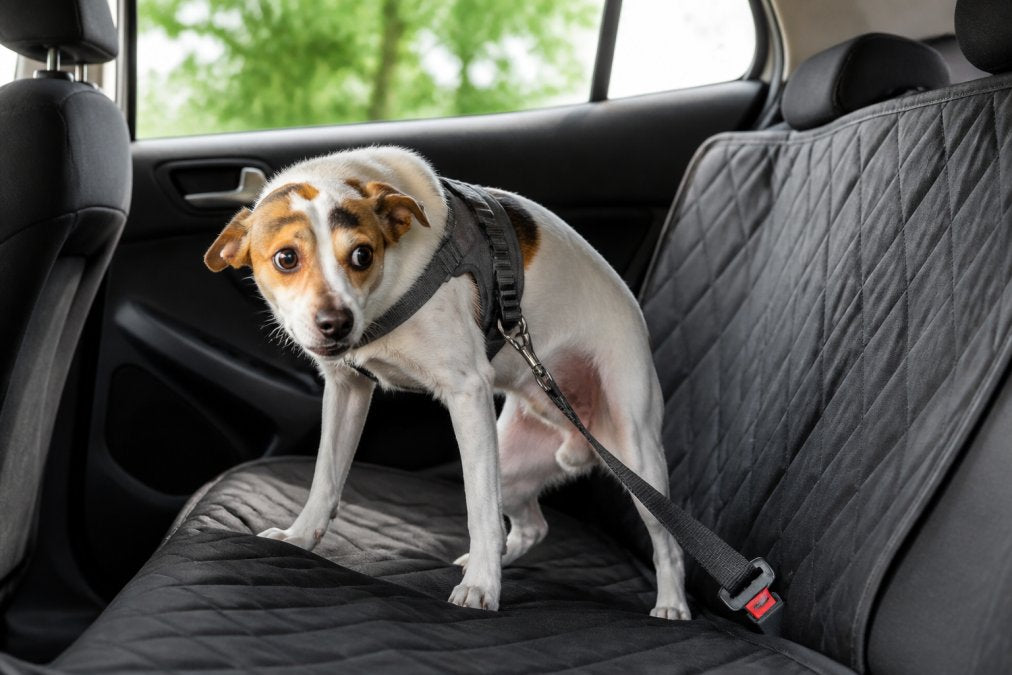
Signs of dog travel stress include panting, whining, pacing, drooling, and lip licking. These are calming signals your dog sends before stress turns into a meltdown. Ignore them and the problem gets worse with every ride.
Watch for these early warnings:
- Panting when it isn't hot
- Whining or trembling
- Pacing or trying to climb into your lap
- Drooling or vomiting (often tied to nausea)
- Yawning and lip licking
- Refusing treats, even high-value ones
Desensitization Training for Dogs: A Step-by-Step Plan
Desensitization training for dogs is the process of slowly pairing the car with good things until the fear fades. Combined with counter-conditioning, it's the most reliable fix. Plan for short sessions, several times a week, and expect the full arc to take four to eight weeks for a mild case and longer for a dog with a bad history.
Step 1: Start With Short-Duration Trips Around the Block
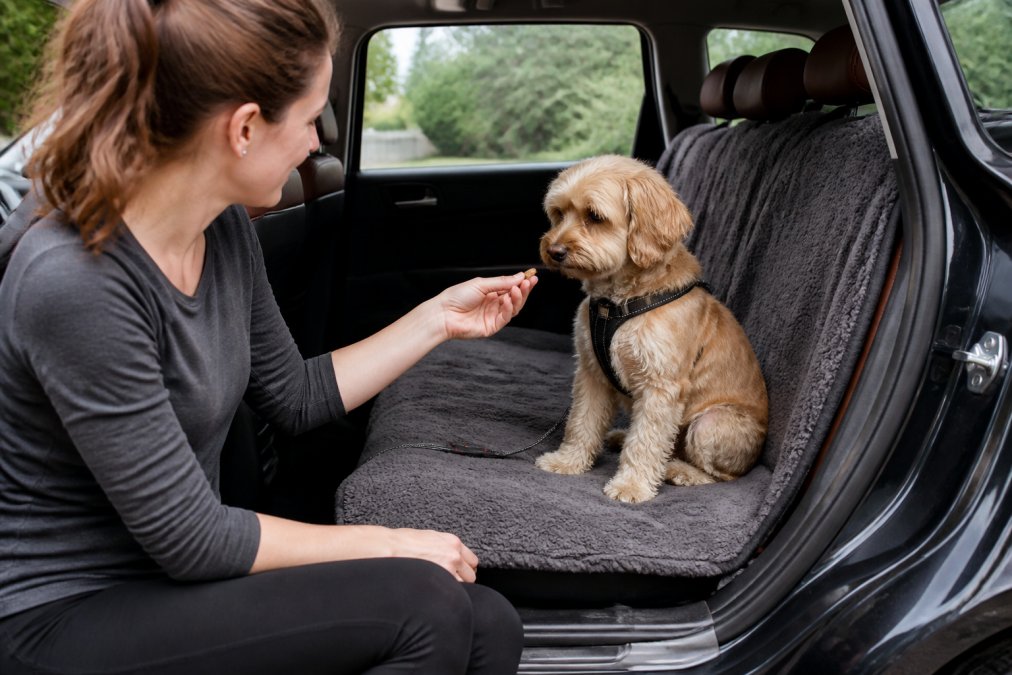
Begin with the car parked and the engine off. Feed treats near the open door, then on the floorboard, then on the seat. Keep each session under five minutes and end while your dog is still relaxed.
Step 2: Pair the Car With High-Value Rewards
Use food your dog never gets otherwise. Positive reinforcement only works if the reward beats the fear. Cheese, chicken, or a favorite toy all qualify. The reward has to arrive before the scary thing, not after, so the car predicts good things rather than the treat being a consolation prize.
Step 3: Build Duration and Distance Gradually
Add a one-minute drive, then two, then five. This progressive exposure teaches your dog that every trip ends safely. Never rush this stage.
Step 4: Make Every Early Trip End Somewhere Good
This is the step most guides skip. For the first two to three weeks, drive somewhere your dog enjoys, or simply loop the block and come home. Do not combine early training drives with vet visits, grooming, or boarding. Those trips can come back once the car itself predicts good things.
Step 5: Troubleshoot the Stall
If progress stops, the cause is almost always one of these:
- Sessions are too long. Cut them in half and rebuild.
- The reward isn't strong enough. Upgrade the food before you change anything else.
- A bad trip reset the baseline. Go back two steps and rebuild without shame.
- The dog is nauseous, not scared. If drooling and vomiting show up before any fear behavior, treat the motion sickness first, then resume training.
Step 6: Handle Post-Traumatic Car Anxiety Differently
A dog who was fine until a car accident, a frightening vet visit, or a hard braking incident needs a slower protocol than a puppy who simply never learned the car was safe. With trauma-based anxiety, the parked-car phase often takes two to three times as long, and the dog may never tolerate the exact route or vehicle associated with the event.
Step 7: Transition From Crate to Seat Belt Without a Regression
Many dogs start in a crate and eventually move to a seat belt and harness. Do the switch in stages rather than overnight. First, let your dog wear the harness around the house for short periods with treats. Next, buckle them in while the car is parked. Then take a single short drive in the harness, and only after that retire the crate.
Pet Car Litter for Dogs and Cats Seat →
Dog Car Safety Gear That Reduces Anxiety and Keeps Pets Secure
Our Pet Car Litter for Dogs and Cats Seat Cover uses a non-slip Oxford cloth base with soft Dutch velvet and plush PP cotton. It gives your dog a stable, cozy nest so they stop bracing on every turn. For a lighter option, the Pet Car Seat Cover for Dogs - Teddy Dog Bed doubles as a bed and a seat protector.

Choosing the Best Dog Harness for Car Travel
The best dog harness for car travel fits snugly, attaches to a seat belt, and lets your dog sit or lie down. A loose harness can slip off in a crash. A tight one restricts breathing. Fit matters more than brand.
Check these fit points before you buy:
- Two fingers fit under every strap
- The chest plate sits flat, not twisted
- Your dog can sit, stand, and lie down
- The seat belt loop sits at the shoulder, not the neck
- No chafing after a 20-minute test wear
| Gear | Best For | Key Feature |
|---|---|---|
| Seat cover | Dogs who slide or pace | Non-slip base, plush comfort |
| Crash-tested harness | Dogs who sit still | Seat belt attachment |
| Travel crate | Large or den-trained dogs | Foldable, enclosed space |
Managing Motion Sickness and Environmental Triggers
- Face your dog forward so the eyes and inner ear agree on the direction of motion. A dog riding backward or sideways gets the worst possible mismatch.
- Block the side windows with a shade, a rolled towel, or a fitted seat cover with a raised back. A dog who can't see the blur stops reacting to it.
- Keep the crate low and level. A crate perched on a seat that rocks on every turn amplifies motion; a crate on the flat cargo floor moves less.
- Cool the car before your dog gets in. Aim for a cabin that feels cool to you, not neutral. Brachycephalic breeds (bulldogs, pugs, boxers) overheat far faster and should ride in the coolest spot in the vehicle.
- Crack windows for cross-airflow, but not so wide that a dog can put its head out. Head-out-the-window riding looks joyful and drives debris, wind, and pressure into the ears and eyes.
- Skip a full meal one to two hours before travel. A full stomach plus motion is the fastest route to a mess in the back seat.
- Take breaks every two hours on long drives so your dog can stand, drink, and reset their balance.
If your dog still drools heavily or vomits on short, cool, forward-facing rides, the trigger is more likely inner-ear sensitivity than anxiety, and that distinction changes the plan. Track each ride for two weeks: note temperature, direction of travel, time since last meal, and whether the dog vomited. Patterns jump out fast, and that log is the single most useful thing you can bring to a veterinarian.
When to Call a Veterinary Behaviorist
Call a veterinary behaviorist when training and gear aren't enough after several weeks of consistent work. A veterinary behaviorist is a vet with extra training in animal behavior. They can rule out pain or medical causes and build a plan for severe cases.
Reach out if your dog:
- Vomits on every ride
- Injures themselves trying to escape
- Shows no progress after 4-6 weeks
- Refuses all food in the car
Conclusion: A Calmer Ride Starts With One Short Trip
Dog car anxiety rarely disappears on its own, but it responds well to patient, consistent training. Start with one short trip around the block, pair the car with rewards, and gear up for safety. The Minnie Store carries the seat covers and travel crates that make each step easier. Browse our pet travel collection and give your dog a calmer ride.
Frequently Asked Questions
Why has my dog suddenly become anxious in the car?
A sudden change often traces back to a specific event: a vet visit, a fender bender, or one rough ride. Dogs form strong associations between the vehicle and whatever happened inside it. Other triggers include motion sickness that developed with age, a change in seating position, or a new medication. If the behavior started after a single bad experience, that points to a post-traumatic response rather than a lifelong fear, and desensitization training can reverse it.
How long does it take to desensitize a dog to car travel?
Most dogs show real improvement within two to four weeks of consistent, short sessions. The timeline depends on how deep the fear runs and how often you practice. Dogs with mild travel anxiety may relax after five or six positive trips. Dogs with a long history of fear-based behavior can take two to three months. Keep sessions under ten minutes at first, and never push past the point where your dog starts panting or whining.
What are the signs of dog travel stress I should watch for?
Watch for drooling, excessive panting, whining, pacing, lip licking, yawning, and tucked ears. Some dogs freeze completely and go silent, which owners often mistake for calm. Vomiting and diarrhea signal that nausea has joined the fear response. Catching these early signs of dog travel stress lets you stop the trip before the experience reinforces the anxiety. If your dog shows these signals in a parked car, you have found your starting point.
Can physical restraints help reduce a dog's car anxiety?
Yes, when they are introduced correctly. A travel crate works to limit pacing and keeps your dog in one spot, which removes the scrambling that feeds panic, for dogs already comfortable in crates. Pair the restraint with a familiar blanket or a plush seat cover so the setup feels like a den rather than a trap. Introduce the gear at home first, then in the parked car, before you ever drive.