

Natural Dog Shampoo for Sensitive Skin: 2026 Guide
Table of Contents
- Why Natural Dog Shampoo for Sensitive Skin Matters
- How to Identify Sensitive Skin in Dogs
- Hypoallergenic Dog Shampoo Ingredients to Look For
- How to Bathe a Dog with Skin Allergies
- Grooming Tips for Dogs with Sensitive Skin
- Environmental Allergy Triggers and Transitioning to Natural Products
- Frequently Asked Questions
Last Updated: September 23, 2026
Why Natural Dog Shampoo for Sensitive Skin Matters
A dog's skin is roughly three times thinner than a human's, which is why harsh cleansers that leave your own scalp fine can trigger real trouble on a dog. That single fact explains why natural dog shampoo for sensitive skin has moved from niche to mainstream. This guide from The Minnie Store covers what actually irritates skin, which ingredients help, and how to bathe a dog without making things worse.
How to Identify Sensitive Skin in Dogs
Sensitive skin is a pattern of recurring irritation rather than a single symptom. Watch for repeated scratching, redness, or reactions that return after every bath.
Common Signs of Skin Irritation
- Frequent scratching, licking, or chewing at paws and flanks
- Red, flaky skin along the belly and under the legs
- Dandruff that returns within days of bathing
- A dull coat or a recurring "doggy" odor that lingers after washing
Some dogs react within hours. Others show irritation two or three days later, which makes the cause harder to spot.
Breed-Specific Skin Sensitivities
Breed matters more than most owners realize. Dogs with heavy skin folds, such as bulldogs and sharks, trap moisture and are prone to dermatitis between the folds. Double-coated breeds like huskies and golden retrievers often develop hot spots when trapped moisture sits against the skin. Short-coated breeds with fine hair, including boxers and dalmatians, expose their skin more directly to shampoo residue.
Hypoallergenic Dog Shampoo Ingredients to Look For
"Hypoallergenic" is a marketing term, not a regulated guarantee. No shampoo can promise zero reactions in every dog, because a reaction depends on your dog's individual immune system, not on the label. What the word should mean in practice is that the formula leaves out the ingredients most likely to trigger irritation and keeps the rest of the list short enough to audit.
How to Read a Dog Shampoo Label
Ingredients are listed by weight, from most to least. That single rule tells you more than any front-of-bottle claim:
- If fragrance or parfum appears in the first five ingredients, it is a major component of the formula, not a trace.
- If water is first and oatmeal is last, the oatmeal is decorative. Look for colloidal oatmeal in the top third of the list.
- If the first three entries are surfactants (cleansers) and nothing else, the formula cleans well and soothes poorly.
- If the list runs past roughly 20 ingredients, ask what each one is doing there. Short lists are easier to troubleshoot when something goes wrong.
Ingredients That Earn Their Place
- Colloidal oatmeal, finely milled oat that suspends in water rather than sinking. It supports the skin barrier and is the most studied soothing agent in pet shampoos. Oat proteins can matter to a small number of grain-sensitive dogs, so introduce it the same way you would any new product.
- Aloe vera, moisturizing and calming, but check that the aloe is not paired with added fragrance, which is common.
- Jojoba oil and coconut oil, restore coat oils and condition skin. On double-coated breeds, heavy oils can leave residue that traps moisture, so rinse longer.
- Shea butter, softens dry, flaky skin. Heavier coats may need extra rinsing to avoid a greasy feel.
- Natural surfactants, plant-derived cleansers such as coconut-based glucosides clean without stripping the skin's oils the way harsh sulfates can.
- pH-balanced formulas, a dog's skin sits closer to neutral than a human's, so a shampoo built for human hair can disrupt the barrier over time.
A veterinary guidance on dog skin conditions notes that most canine skin problems involve an underlying trigger, so removing irritants is step one, not the whole fix.
Ingredients to Avoid
Skip products built on synthetic fragrance, harsh sulfates, parabens, and dyes. "Paraben-free" and "sulfate-free" labels are worth checking, but read the full list, since fragrance is often the hidden offender.
| Ingredient | Why It Helps | Watch For |
|---|---|---|
| Colloidal oatmeal | Soothes itch, supports skin barrier | Grain sensitivities in a small number of dogs |
| Aloe vera | Moisturizing, calming | Often paired with added fragrance |
| Jojoba oil | Restores coat oils | Heavy residue on double coats |
| Coconut oil | Conditions skin and coat | Greasy feel if overused |
| Shea butter | Softens dry, flaky skin | Heavier coats may need rinsing |
| Plant-derived glucosides | Gentle cleansing without stripping | Can foam less than sulfate formulas |
Concentration and Contact Time Matter
Two shampoos with identical ingredient lists can behave differently depending on how concentrated they are and how long they stay on the skin. A concentrated formula poured straight onto one patch of skin can irritate even if every ingredient is gentle. Diluting it in your hand or a cup spreads the cleanser evenly and lowers the chance of a hot spot.
What "Hypoallergenic" Cannot Do
A hypoallergenic shampoo removes a common irritant. It does not treat an allergy, resolve a food sensitivity, or replace a veterinarian's diagnosis. If itching continues after you switch to a short, fragrance-free formula and rinse thoroughly, the shampoo was probably never the whole story, and no label on the shelf will tell you that.
Pet Shampoo Brush and Massage Comb →
How to Bathe a Dog with Skin Allergies
Bathing a dog with allergies follows the same steps as any bath, with three changes: cooler water, longer rinsing, and a slower introduction of anything new. Warm water and leftover residue are the two most common reasons a bath backfires, and both are easy to fix once you know what to aim for.
Before the Bath
- Brush out loose fur and mats before water touches the coat. A matted coat holds shampoo against the skin and makes rinsing nearly impossible.
- Gather everything first, shampoo, cup or pitcher, silicone brush, several towels. A dog left wet while you search for a towel gets cold, and a cold dog scratches.
- Check the forecast. Bathing on a cold day means a longer drying window, and damp skin sits closer to irritation.
Water Temperature and Dilution
Aim for lukewarm water, roughly the temperature you would use on a human baby, comfortably warm to the touch but never hot (A Beginner’s Guide to Bathing Your Puppy the Right Way). Hot water strips oils from an already-compromised barrier and can make itching worse in the hours after the bath.
Washing and Rinsing
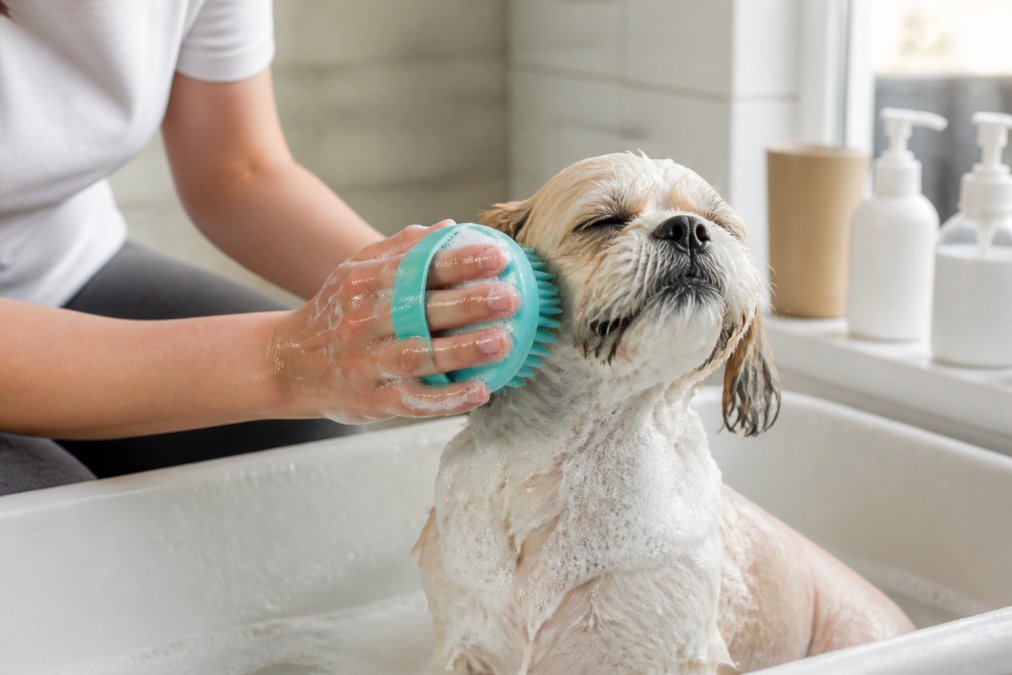
- Work the diluted shampoo in with a soft silicone brush so it reaches the skin, not just the topcoat. Move in the direction the coat grows and avoid scrubbing against the grain on irritated areas.
- Rinse for at least twice as long as you lathered. A useful benchmark: keep rinsing until the water running off the coat feels slippery-free between your fingers, then rinse one more pass. Shampoo left near the skin keeps irritating long after the bath ends.
- Pay extra attention to the armpits, groin, belly, and the space between the toes, the places residue collects and the places dogs scratch first.
Drying Without Triggering a Flare-Up
- Towel dry with firm, blotting pressure rather than rubbing, which can abrade already-irritated skin.
- Dry every fold and crease completely. Moisture trapped in a skin fold is a common setup for dermatitis, especially in breeds with heavy wrinkles.
- Keep the dog warm until fully dry. A damp coat plus cool air is a reliable recipe for a scratching session.
- Skip the blow dryer on high heat. If you use one at all, keep it on the coolest setting and hold it well away from the skin.
After the Bath
A common mistake is rushing the rinse. If your dog is still scratching a day after a bath that used a gentle, fragrance-free shampoo, the rinse is the first thing to lengthen before you blame the product.
Grooming Tips for Dogs with Sensitive Skin
Grooming a sensitive dog is about frequency and gentleness, not intensity. Most dogs with reactive skin do better on a regular, predictable routine than on occasional deep cleans.
Environmental Allergy Triggers and Transitioning to Natural Products
Environmental triggers often cause more itching than food or shampoo. Pollen, dust mites, mold spores, and even lawn treatments can set off the same scratching you blame on bath products.
Frequently Asked Questions
What is the best natural dog shampoo for sensitive skin?
Look for a natural dog shampoo with colloidal oatmeal, aloe vera, and shea butter. These ingredients soothe irritation and support the skin barrier without synthetic fragrance or sulfates. A pH-balanced formula made for dogs is essential because human shampoo is too acidic for their skin. Always check for paraben-free and sulfate-free labels, and test a small area before a full bath.
What ingredients should I avoid in dog shampoo for sensitive skin?
Avoid synthetic fragrance, sulfates, parabens, and essential oils like tea tree or citrus, which can trigger reactions. Also skip shampoos with artificial dyes or harsh preservatives. These ingredients strip natural oils and worsen itchiness. Instead, choose formulas with colloidal oatmeal, aloe vera, or jojoba oil. If your dog has known allergies, read labels carefully and consult your veterinarian before trying a new product.
How often should I bathe a dog with sensitive skin?
Most dogs with sensitive skin need a bath every 4 to 6 weeks, but this varies by breed and condition. Over-bathing strips natural oils and causes more irritation, while under-bathing lets allergens build up. If your dog has environmental allergies, a weekly bath with a gentle natural shampoo may help. Always use lukewarm water and a soothing shampoo, and follow with a moisturizing conditioner if recommended by your vet.
Can I use human shampoo on a dog with sensitive skin?
No, human shampoo is formulated for a different pH and can disrupt a dog's skin barrier, leading to dryness, itching, and infections. Even baby shampoo is not ideal because it lacks the soothing ingredients dogs need. Always use a pH-balanced dog shampoo made with natural ingredients like colloidal oatmeal or aloe vera. If you run out, rinse with plain water and wait until you can get a dog-specific product.